Erika Larkin's Golf Blog

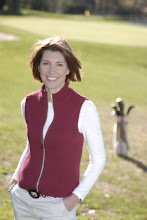
Erika Larkin is a Certified PGA Professional. She is the Director of Instruction at Stonewall Golf Club in Gainesville, Virginia and operates the Larkin Golf Learning Community. This blog includes announcements about Erika's latest instructional opportunities, events, press, student updates, golf tips, and general thoughts on industry related topics. Check out www.larkingolf.com for more info. Enjoy!

Thursday, January 19, 2012

Newt and Golf... ? :) OWN IT!

Living near Washington D.C. I may be more in tune to politics than if I lived elsewhere, but I couldn't help get inspired the other night after watching the SC Republican Presidential debate. If you didn't see it, Newt Gingrich made a great point about how he would help create jobs- he would help people find a job (any job- even janitorial work) ... then teach them to get a BETTER job... then teach them to OWN the job. So how does this apply to golf? I think a lot of golfers have this mentality that they can just skip steps and find the swing cure tomorrow, gain 20 yards or drop 10 strokes with a magic tip or new golf club. So listen to Newt (and me) ...start by learning the basics, improve your skills, then master your skills then you will OWN YOUR GAME!

Teacher of the Year!

I'm thrilled to announce my recent award as the Middle Atlantic PGA Section Teacher of the year! I will continue to earn this every day. Here is a link to the posting about this year's award winners.

Monday, January 31, 2011

PGA Show and Teaching Summit 2011


Well I just got back from a great week in Orlando!

PGA NATIONAL TEACHING AND COACHING SUMMIT

I spent two days at the Nick Faldo Golf Institute for the National PGA Teaching and Coaching Summit. There, I met a few notables including Michael Breed (who MC'd the event), Bobby Clampett (who've I've written about before), and really enjoyed a few presentations particularly Lou Holtz who gave a motivational and hysterical speech on coaching, Bob Toski -still going strong at 83 years young, Derek Shelton- a Tampa Rays Hitting Coach who talked about the similarities/differences in baseball and golf swing training, and the "debate" on ball flight laws between Trackman representatives and Dr. Gary Wiren (the father of ball flight laws)- very interesting.

The hot new word was "D plane"= an old, but new physics phenomenon that has been applied to ball flight "laws"- I'm still not sure if I totally understand it... I might need to go back to school!

I learned about some new 3d video analysis software debuting from Bentley Kinetics. For a second time, I saw a presentation about AIMPOINT green reading and I'm looking forward to becoming one of only approx 150 certified instructors in the country later this summer!

With all of that said and all of the research and data being collected and analyzed in all areas of the game because of technology....there were just as many experts/presenters that talked about how we need to get away from swing styles and overwhelming our students with technology and striving for the "perfect swing." There were many references to all the different and un-orthodox swings that have become some of the best players in history, and that its not about swing- its about skill. We need to as teachers help our students be more well rounded, apply skills to the course, spend more time practicing and teaching on the course- situational skill application, different lies, decision making, mental and emotional control- this is the way people will improve and enjoy the game more. We have to keep finding way sot make golf fun so we can retain students and players.

I see both sides of the coin. I can't ignore the research and technology and think that a lot of that, presented correctly and wisely by a teacher can really help a student. But like all things, balance between that and the "holistic"approach that was talked about too is the key. I guess that is what separates the good teachers/coaches from the GREAT... their ability to know when to make swing changes and when not to mess with raw talent- how to nurture different players in the right ways and to be well-rounded or having a team of people to help you help your students in all ways possible. I will try my best to be THAT kind of Coach.

THE PGA MERCHANDISE SHOW:

This was my 6th time attending the show over the last 8 years. It is an amazing huge show- I guess I'm numb to some of the excitement because I've been a number of times now. Its still fun to walk around, see the vendors, network with new and old friends and see what and who you can see. I am happy to report that some of the main manufacturers returned after a sabbatical...in particular, my sponsor Taylor Made had a very impressive, extensive booth that took up a whole WING at the convention center. Their new products were the highlight of the show from top to bottom. The new white R11 and burner line is good looking and you can adjust it numerous different ways- more than ever before. Ex.-you can take the 9degree head and change it down to 8 or up to 10. No more worrying if you bought the right driver..just turn the hosel!

People always ask me - "so what did you buy at the show?"... I did invest in some new swing analysis software Swing View Pro, that I'm excited about. I ordered a few new training aids included some of EyeLine's new products: portable full swing mirror, a putting steel ball, sweet spot pads and putting mirror. I also ordered Mike Bender's new Bender Stick- an adjustable foam rod that can be used as a guide or a blocker for swing training.

I saw a few live fashion shows including Puma and Callaway... both sporty and young. Goodbye old frumpy fashions... I think they are gone fore

Overall a great week- my brain is tired from all the excitement and my feet are tired from walking miles and miles as I am 34 weeks pregnant now.

I'm back home, and back to my reading project, so stay tuned for the next book review coming later this week!

Wednesday, January 19, 2011

Book #5 Bob Toski

Bob Toski's Complete Guide to Better Golf (c 1977)

I chose this book because I didn't know much about Toski and have always been told by peers "oh you have to read some of his stuff, its really good.." So I ordered this 1983 copy off Amazon.com because I couldn't find it in the store. This was definitely a piece of nostalgia...should I read it, or frame it? !

So this was originally published a few years before I was born... which means almost 15 years before I even picked up a golf club or ever read a golf instruction book. The whole time I was reading this book (illustrated/photographed in full color by the way:) as it states on the cover!) I had to laugh at a few things like "turn your cheek at address.." and "Reverse C for a swing that's free".... not exactly what you would hear now a days... also, "distance formula: add motion, subtract muscle". From what I understand that (the latter point) sums up Toski's teachings. The "60's- 70's" swing" like many things in those decades was more free. In golf terms: whippy, handsy and more about timing. Today timing is important but with all the research in bio-dynamics and popularity of fitness, there is much more muscle and much less hands in golf now.

In the book, Johnny Miller's grip was not criticized for being weak nor was Lee Trevino for being very strong, but the differences were recognized as style preferences. Toski (with Dick Aultman, Golf Digest) nicely illustrate the why and how of ball-flight patterns. In this faults and fixes section many times, Toski suggests slowing down a backswing or lengthening a backswing as a way to fix a problem. You would very rarely here this fix today when talking about how to fix topping or pulling.

I kept thinking.. okay, what is so special about this book? What made Bob Toski so renowned? I guess because I didn't live through it, its hard for me to understand what may have been earth shattering about this book at the time. Was it just a quintessential book of its time, laying out points of swing style and theory? Or was there some NEW idea that he presents that I just don't recognize since I didn't live through it? Maybe everything in this book was "new" at the time and I just don't realize it? Maybe someone out there can help?

One last note.. I did enjoy, for nostalgia sake, the 30+ pages at the end of the book with Toski's detailed analysis of various swing sequences from popular golfers at the time. That was kinda of neat to compare in my own mind how different the swings of today look.

So my personal takeaway on Toski is this: the average golfer is typically not in supreme physical condition, so a knee sliding, handsy approach to the swing could work in his/her favor and allow for decent speed to be created. However... the average golfer is looking for consistency and hands and timing are two of the hardest things to control from a consistency standpoint. It puts more importance on the coordination of the small muscles amount of practice it would take to train them to repeat a particular pattern in a particular timing to work. So therefore, the more modern swing driven by positions and patterns of the big muscles is simpler and easier to be consistent with for the average golfer.. in my opinion.


But of course its your choice...Hands or muscle... which kind of golfer are you?

Thanks for the perspective Mr. Toski. Its always refreshing to look back.

Wednesday, December 22, 2010

Making Golf Fun

My husband and I were just having a conversation yesterday as we drove home from a little vacation about ways to make golf more fun. We agreed that in general golf is time consuming, too hard for most people, and too strict when it comes to rules and tradition- maybe that is why we are having trouble in today's society really growing the sport among adults. Then I opened up the most recent issue of Golf Digest (Jan '11) -what a great issue by the way....and what do I see?...a whole section "The FUN Issue" make your game a blast. They recounted almost all the points Mike and I discussed and more. So to share, here are the ways you can make this game more fun for you, your friends and family!

- Invent your own rules (who says a foot-wedge, 3 foot gimmies or 1st tee mulligan are all that bad?)
-Lighten your load - don't play with as many clubs. It will be simpler and you might even be encouraged to walk the course with a smaller lighter bag!
-Betting- try unusual bets like if you think someone's going to three putt put up $5... if the person 2-putts they get $2 or if they sink it, they get $20!
-Don't keep score
-Play fewer holes
-Stop playing stroke play- play matches or scrambles
-Move up to the front tees or even the fairway (play every hole as a short par 4) How short do you have to make the course to break par?
-On a quiet night or day- make up your own course. This is called "cross country"... play from the first tee to the 17th green as the crow flies, and so on...
-Play night golf or find a lit-course!
-KIDS: make up a separate set of rules and tee boxes for kids under 13... Free water balls, x# of do-overs, magic putts, hand wedges out of the sand after one try. This will speed up play and they will have more fun. Also don't wait for them to tell you they've had enough... leave the course before they are ready. Leave them wanting more!

Let's have some fun in 2011! Break the rules, its okay! Just keep playing golf!

Wednesday, December 15, 2010

Book #4 White Pearl

White Pearl & I: A memoir of a political refugee, by Svetlana Kim

Okay, this is not a golf book. Instead, an inspirational one that I highly recommend (with a few good lessons that could be applied to life and of course golf). This is an autobiography of a Korean-Russian woman who made an unbelievable journey to this country- and pursued the American Dream; a real rags to riches tale. As she tells her story she flashes back to the wisdom and stories of her grandmother, affectionately called White Pearl. She did have to overcome a lot and had a few hurdles to cross but it almost seems like she was "lucky", in the right place at the right time. She randomly met people who helped her out of the goodness of their heart. She was given opportunities by people that saw her passion and drive and she made the most of them everytime. Svetlana was always hard working, and even when things did not go her way, she never gave up the hope of what she thought she could be, she wasn't afraid to leave what she "knew" at home, and never ever felt sorry for herself. Afterall, this was America- anything was possible.

I think to some degree what she practiced was the "Laws of Attraction". If you're not familiar with what that means, its an actual theory based on Plato's the Law of affinity. It states that like attracts like when speaking of elements, and even electromagnetic forces. Because we as humans have electrical and chemical composition we too are affected by this and will tend to gravitate to those ideas, things and people that are similar to us physically, mentally, etc. We can attract and write to some degree, our own destiny. So, for life or even for golf, know this:
  • You must know where you are going in order to get there. (Set goals!)
  • Don't let small setbacks discourage you- keep your hope up ( doesn't this sound like a round of golf?)
  • Visualize what you want your life/golf game to be and believe that it can really happen.
  • Creating your own reality, looking for the upside in situations and having a good attitude is more than half the battle in teaching your goals. (you'll play better golf when you're positive)
  • Surround your self with information and people that can help you get there. No one reaches there goals without help from others. Who is your White Pearl?
  • Don't be afraid of the unfamiliar...(new experiences, feelings, information) embrace it.
I hope even without reading the book, you might find some inspiration in those ideas. But I would highly encourage you to check it out.

Tuesday, December 14, 2010

Book #3 The Impact Zone: Mastering Golf's Moment of Truth

If and when I write my own book one of these days, I think would end up echoing a lot of things in this book: "The Impact Zone" by Bobby Clampett & Andy Brumer. Based on his outstanding playing career, broadcasting experience, research/help from with the wonderful Swing Vision technology (high speed cameras) and time spent teaching Mr. Clampett writes about the indisputable dynamics that every good golf swing has in common ( and how to learn them). He says in the opening pages (similar to Dr. Rick Jensen in his book "Easier Said than Done") good golf shots happen because of good dynamics- not style. He doesn't care about back swing or positions or how the swing looks per se.... if you can master the dynamics, you will have the best chance to hit consistent, solid shots.

Here they are:
1- Flat left wrist at Impact
2- Swing bottom that is forward of the ball
3- Loading the club with the wrists
4-Lagging the load (and using pivot to deliver it at the swing bottom)
5- Swinging along a straight plane line through impact.

None of these are rocket science, but the way he presents it like a teaching method (even though its not stylized) is logical and good. In order from small swings to big swings ( the same way I teach) he builds on each dynamic and suggests practice ideas. If you can't master Dynamic #1 (which would be fundamentally important starting with putting) you shouldn't expect to have success in your ball striking with full swing. Dynamic 2 has to work starting with chipping. The absence of a dynamic doesn't mean you won't be able to hit a golf ball, but it can explain almost every inconsistency, swing flaw and and compensation ex.- hitting thin, fat, scooping, casting, poor balance, late weight shift, etc.

One NEW takeaway for myself was about Drivers... I admit, I thought and have always taught that the ball is hit on the "upswing" with a driver...I guess I was wrong. I didn't know that most good players are reaching their swing bottoms after the ball even with this club. Wow. Thank you Swing Vision for blowing my mind. Thank you Mr. Clampett for bringing this to my attention. Maybe my students and I will all pick up an extra 10 yds now!

The first 100 pages are the meat of it and worth studying for sure- the rest in my opinion, even though I liked the book as a whole, are skim-able. He gets into how club fitting and mental dynamics relate to good mechanics and mastery of them... let's get the dynamics down first.

One warning- the language in this book is not geared for the new golfer... (that is the book I'm going to write:) ! ) but if you understand golf lingo and don't mind some technical talk its pretty easy to follow all things considered.

I found this book on Amazon, but its probably available in stores too. Enjoy!